
Pooler, GA · Garage Door Service
When Your Pooler Garage Door Needs More Than a Quick Fix
Pooler homes built between 1964 and 2011 often have original openers and springs from the 1980s and 90s. Know when a mild freeze day signals real trouble.
- Repairs & new doors
- Springs & openers
- Serving 7 nearby communities
When to Call Someone
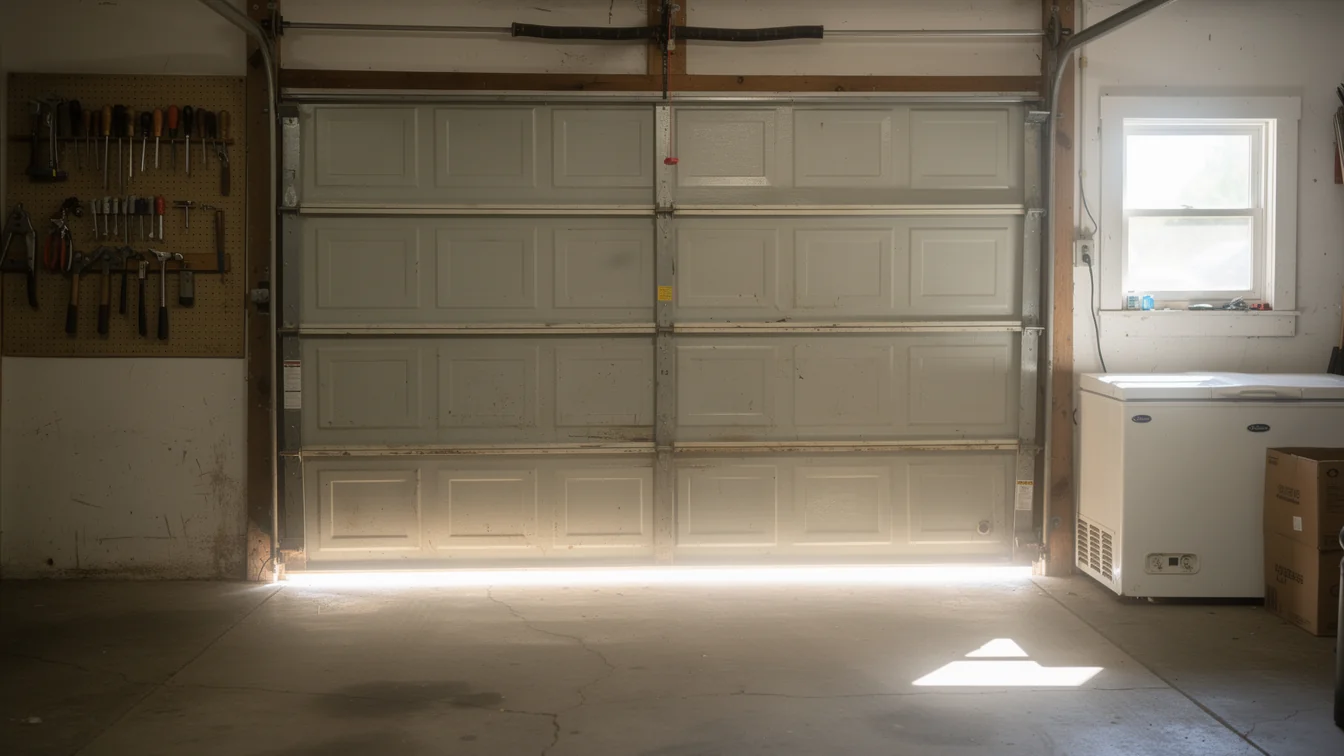
Most houses in Pooler's service area were built between 1964 and 2011, with the median landing around 1990. That means a lot of garages still running the opener and spring that came with the house. If your door groans on the way up, hesitates halfway, or the opener motor sounds like it's working harder than it used to, that's not background noise - that's thirty-plus-year-old hardware telling you it's near the end of its cycle count.
Call someone the day you notice the door sagging on one side, a spring with a visible gap in the coil, or a cable that's frayed anywhere along its length. Those aren't wait-and-see problems. A torsion spring under tension that lets go while someone's hand is near it can break fingers or worse. If the door reverses on its own before touching the floor, or won't reverse at all when something's under it, stop using it and call that same day - that's a safety sensor or cable problem, not a convenience issue.
Don't call for a door that's just noisy but moving fine and holding its position. That's usually a lubrication fix you can do yourself, and it's not worth a service charge.
The Problem
Pooler's housing stock leans heavily into the 1980s and 90s across the fifteen neighborhoods we cover, with construction stretching from 1964 up through 2011. That spread matters because it means a huge share of doors in this area are running original torsion springs and original chain-drive or belt openers from that same build era - hardware that was rated for a certain number of open-close cycles and is now well past it in most households.
The real problem isn't that the parts break. It's that when they do, they're often not the same parts anymore. A spring wound for a door built in 1988 isn't always a straight swap with what's on the shelf today - door weight, drum size, and winding cone specs shifted over the decades. We can usually match or adapt it, but on some of the oldest setups, a repair turns into a full torsion system replacement because the original parts are no longer made to that spec. That's not us upselling; it's just what happens with hardware this age.
We won't pretend every old door is a lost cause. Plenty of 1990s doors are solid structurally and just need springs, cables, and rollers swapped out. But if the opener is original to a house built before 1990, expect to talk about replacement, not just repair.
What Local Conditions Do
Pooler sits in a mild climate band with occasional freezes, not the hard winters that crack panels or freeze tracks solid. That sounds easy on a garage door, and mostly it is - but it creates its own problem for hardware that's already decades old. Grease on a spring or roller that's been sitting since 1992 doesn't flow the same on a cold morning as it does in July. On the handful of freeze days each year, that stiffness is enough to be the final straw on a spring that was already fatigued from thirty years of cycles.
The swing matters more than the cold itself. A door that sits fine through long mild stretches and then gets hit with one sharp overnight freeze is more likely to show a problem right after that freeze than during it - a spring that snaps the next time it's asked to lift the door, or an opener motor that strains because the chain tension tightened up overnight.
We don't see the kind of ice-dam or frozen-track calls you'd get further north, and we're not claiming otherwise. What we do see is older hardware finally giving out on the one or two genuinely cold mornings a year, because that's when the stiffest, driest parts of a thirty-year-old system get asked to move.
What to Check
Start with the spring. Look for a visible gap between coils when the door is closed, or rust spreading along the coil - on hardware from the 1980s and 90s, surface rust alone isn't an emergency, but a gap is. Next, run a hand along the lift cables on either side of the door, carefully, with the door down. Fraying anywhere along the cable means it's due for replacement before it snaps.
Check the opener's age if you know roughly when the house was built. If it's original to a home from before 1995 or so, it's old enough that failure is a matter of when, not if, and the safety reverse sensors on units that old may not meet current reverse-force standards. Test the auto-reverse by setting a 2x4 flat under the door and closing it - it should stop and reverse the instant it touches the wood.
Here's the honest limit: you can't judge spring tension or cycle life by eye. A spring can look fine and still be close to failing, because the fatigue is internal to the steel, not visible on the surface. If the door is original to a 1980s or 90s build and nobody's touched the springs since, that's worth a professional look even if nothing looks wrong yet.
Frequently asked questions
My house was built in the late 80s and the opener still works - do I need to replace it anyway?
Not necessarily. If it's opening and closing smoothly and the auto-reverse still works when tested, you can keep running it. But openers from that era often lack the safety reverse sensors required on newer units, so we'd still want to check that part even if the motor itself is fine.
Why did my spring snap on one of the few cold mornings we get?
A spring that's already near the end of its cycle life is more likely to fail the first time it's asked to lift a door after a sharp overnight temperature drop, because stiff grease and tightened metal add extra load right at the weakest point. The cold doesn't cause the failure so much as time it.
Can you match the original spring on a door from the 1990s?
Often yes, but not always exactly - drum sizes and winding specs changed over the decades, so on some older setups we adapt rather than match part-for-part. On the oldest systems this sometimes means replacing the full torsion assembly instead of just the spring.
Related garage door services in Pooler
More garage door guides
Book garage door service in Pooler
Call now or request a quote - tell us what the door is doing and where you are.