
Pooler, GA · Garage Door Service
What a Service Call Actually Covers in Pooler
A look at what Pooler Garage Door Pros actually checks on a service call, tied to Pooler's 1980s-90s housing stock and mild, occasional-freeze climate.
- Repairs & new doors
- Springs & openers
- Serving 7 nearby communities
When to Call Someone
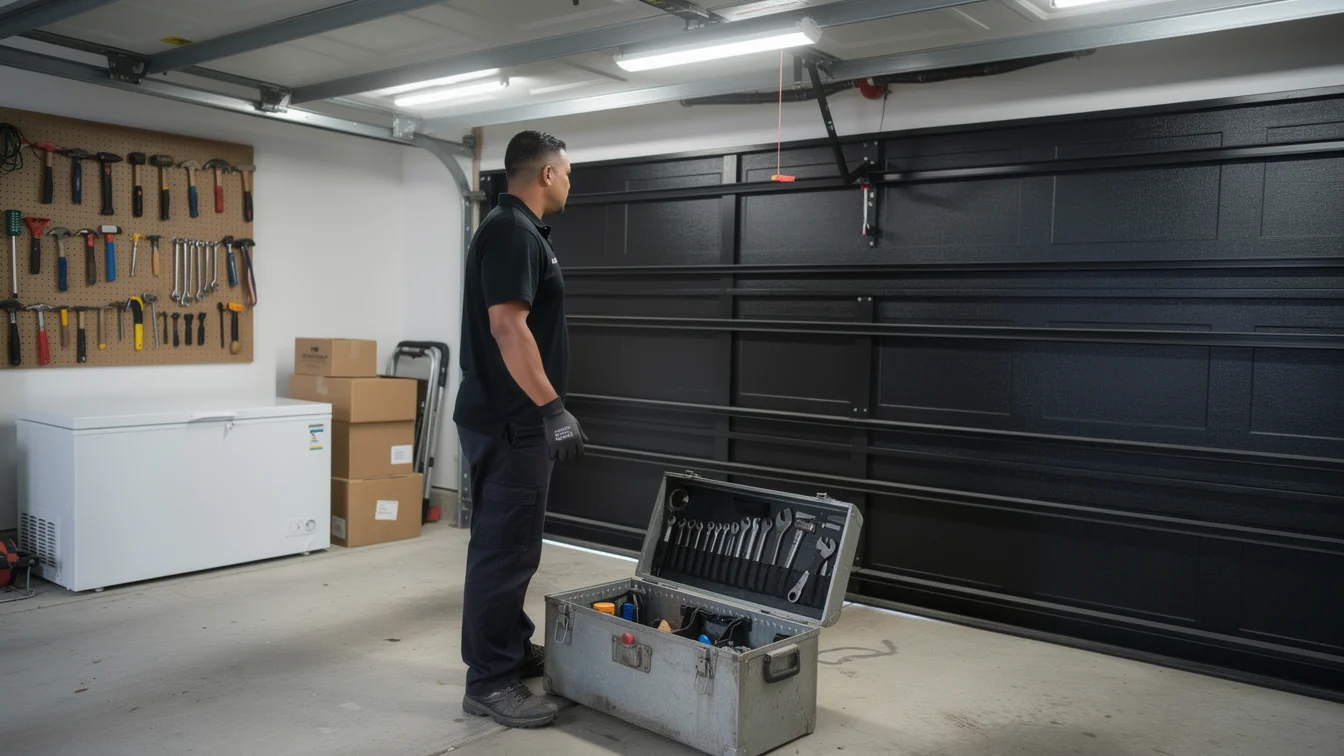
Most houses in Pooler went up between 1964 and 2011, with the bulk of the stock dating to the 1980s and 90s across the fifteen named areas we work in - Bloomingdale, Garden City, Port Wentworth, and the rest out to Richmond Hill and Wilmington Island. That range matters because a door that age is past its original springs and probably past its original opener too. Call when the door is noisy in a new way, when it hangs crooked on one side, when the opener runs but the door doesn't move, or when a cable looks frayed. Don't wait on a spring that's already making a popping sound under load - that's a matter of days, not weeks. A door that simply won't open with no obvious damage is worth a call before you start pulling things apart yourself, since a torsion spring under tension can do real damage to a hand or a face.
We'd rather get a call for something that turns out to be minor than get a call after someone's been hurt trying to free a stuck door themselves. That's the honest version of urgency - not every noise is an emergency, but a few of them are.
The Problem
A door installed in 1985 or 1992 - which describes a lot of garages in Pooler given the median build year of 1990 - is carrying hardware that predates most of the openers and safety sensors sold today. Galvanized springs from that era lose tension at a predictable rate, and by year thirty they're often operating well outside the factory spec even if they haven't snapped yet. Tracks on houses from that period were frequently set with looser tolerances than current code calls for, so a door that's never been serviced tends to walk slightly out of alignment over a couple of decades.
The practical result: a homeowner calls about a specific symptom - a grinding roller, a door that reverses on its own - and the service call usually turns up a second or third issue that's been building quietly for years. That's not us padding the ticket. It's what thirty-year-old hardware looks like once you're actually standing in front of it with a light.
What Local Conditions Do
Pooler sits in a mild climate band with occasional freeze, which is easier on garage door hardware than a hard winter climate, but it isn't nothing. Coastal humidity swings and the occasional overnight freeze cycle steel springs and bearings through expansion and contraction even here, and that cycling is part of why thirty-year-old springs from the 1980s-90s building wave are often found at or past end of life when we get out there. We don't see the ice-related track failures that colder regions deal with, but we do see corrosion on hardware that's gone un-lubricated for years in a humid garage, and we see weatherstripping that's cracked from UV and heat rather than cold.
This is also why a door that's fine in spring can act up after a stretch of cold mornings - metal hardware that's been loose for a while tightens up differently when the temperature drops, even a little, and a marginal spring or bearing can go from quiet to loud almost overnight.
What to Check
Before you call, a few things are worth a look. Check whether the springs are the torsion type above the door or the older extension type along the side tracks - torsion springs on a house built in the 1980s-90s wave are usually original if nobody's mentioned replacing them. Look at the cables for fraying near the bottom bracket. Listen for grinding versus popping - grinding is usually a roller or bearing, popping under load is a spring. Check that the photo-eye sensors near the floor are aligned and not knocked loose, since a door that reverses without touching anything is often just a dirty or misaligned sensor, not a mechanical fault.
We don't recommend homeowners touch the torsion spring itself - that's the one place where a service call isn't optional. Everything else listed here is safe to eyeball before you pick up the phone, and knowing which category your symptom falls into saves everyone time on the call.
Frequently asked questions
How old does a garage door have to be before it needs a full service check?
Given that most Pooler houses were built between 1964 and 2011 with a median around 1990, a lot of original hardware is now thirty-plus years old. We'd put a full check at the top of the list for anything from that era that's never been serviced, regardless of whether it's acting up yet.
Does Pooler's climate cause garage door problems the way cold-weather towns see?
Not in the same way. Pooler's climate band is mild with only occasional freeze, so we don't see the ice-jammed track failures of colder regions. We do see corrosion from humidity and UV-cracked weatherstripping, which is a different kind of wear but still wear.
Is it ever not worth repairing an old door?
Sometimes. If the door itself is original to a 1980s or 90s build and the panels are dented or rusted through along with failed springs, replacement usually costs less over time than repeated repair. We'll tell you straight when that's the case rather than keep patching it.
Related garage door services in Pooler
More garage door guides
Book garage door service in Pooler
Call now or request a quote - tell us what the door is doing and where you are.