
Pooler, GA · Garage Door Service
Garage Door Service for Pooler's Aging Door Hardware
Pooler homes built from the 1960s through the 2000s are hitting the age where springs, rollers, and openers fail. Here's what that looks like and what it costs to fix.
- Repairs & new doors
- Springs & openers
- Serving 7 nearby communities
Can You Do This Yourself
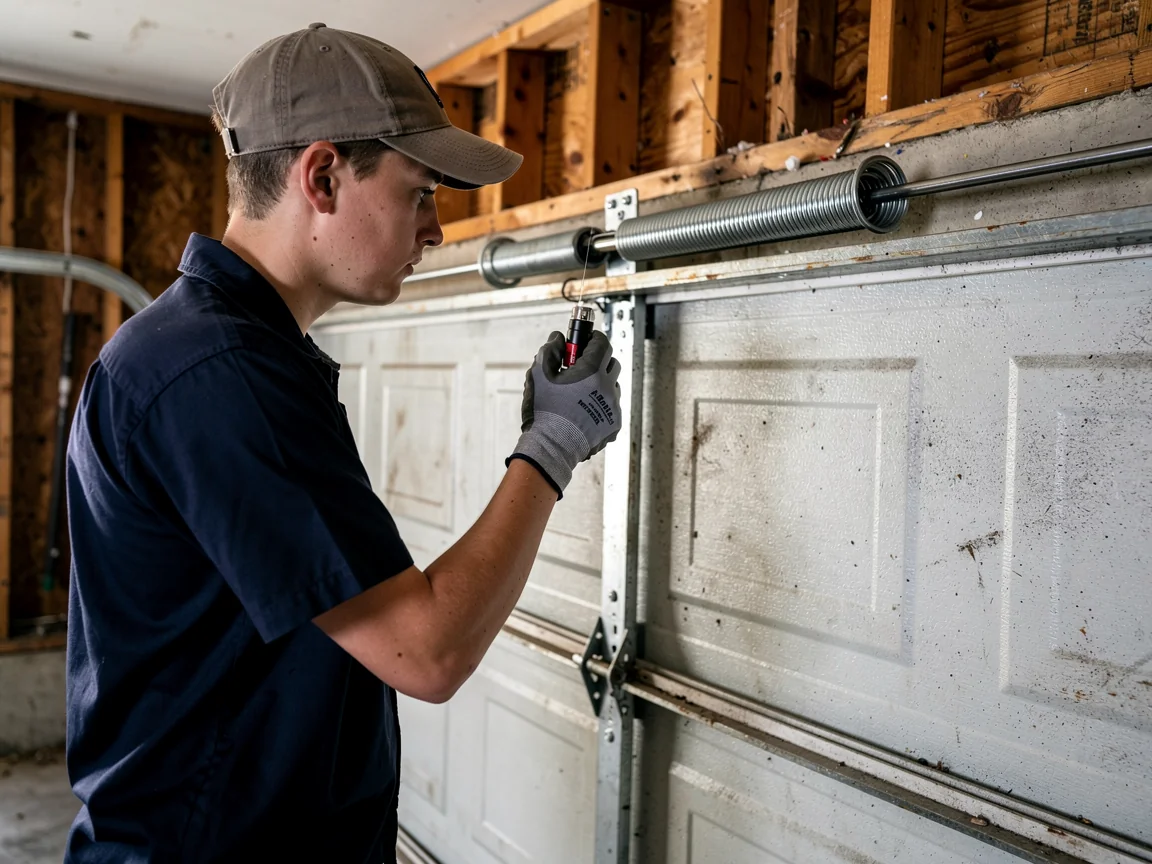
If your door is slow to close, hangs crooked, or the opener grinds without moving the door, you can check a few things yourself before calling anyone. Pull the release cord and lift the door by hand - if it feels heavy or drops on its own, that's a spring problem, and springs are not a DIY repair. A torsion spring is wound under enough tension to break a bone or worse if you don't have the bars and the experience to wind it safely. You can safely check and tighten loose roller brackets, clean track debris, and replace a worn weatherstrip yourself. You can also test your photo-eye sensors by waving a broom handle through the beam. What you shouldn't touch: the spring, the cable drums, or anything under tension. With houses in this area running from 1964 up through the early 2000s, a lot of original hardware is well past its rated cycle count, and metal fatigue doesn't announce itself before it lets go. If the door won't budge, or moves unevenly on one side, that's a call, not a project.
The Symptom
The pattern we see most in Pooler is a door that used to run smooth and quiet starting to groan, shudder, or hang open an inch or two at the bottom corner. Sometimes the opener runs its full cycle but the door barely moves. Sometimes one side lifts a beat before the other, which means a spring or cable on one side is carrying more than its share. Homeowners often describe it as the door 'feeling heavier' than it used to, which is exactly right - a weakening spring doesn't fail all at once, it loses lift capacity in stages. Rollers that have gone from steel to a rough, pitted surface will also throw a rhythmic squeak or thunk with every rotation. None of these are emergencies on day one. By the time the door won't open at all, though, the spring has usually already gone.
Why It Happens Here
Most of the housing stock across the service area was built between 1964 and 2011, with the bulk of it going up in the 1980s and 90s across the fifteen or so neighborhoods we work in. That means a large share of garage doors and their original hardware are now 25 to 45 years old - well beyond the service life of a standard torsion spring, which is rated in open-close cycles, not years. A door used twice a day for three decades has put a lot of wear on parts nobody thinks about until they fail. The climate here plays a role too. It's a mild band with occasional freeze, which doesn't sound harsh, but the swing between humid summer stretches and the odd cold snap is exactly the kind of cycling that accelerates rust on steel rollers, hinges, and cable ends - especially on doors that haven't been lubricated in years. It's not storm damage causing these calls. It's age and moisture doing slow work on original equipment.
The Cost of This Job
We don't have a flat number to quote here since it depends on whether you're looking at a spring swap, roller replacement, cable work, or an opener that's finally done. What we can tell you is that the household income across the service area runs a median around $80,000, and most of the roughly 24,800 owner-occupied houses here were built with hardware that's reaching or past its expected lifespan - so this isn't a rare repair, it's a routine one for houses of this age. One honest note: if your opener is original to a house built in the 80s or 90s, repairing it is sometimes false economy. A new logic board costs real money, and if the motor or gear set is also worn, you're often better off replacing the unit outright rather than patching it piece by piece.
Frequently asked questions
How old does a garage door spring usually get before it breaks in Pooler?
It depends on cycle count more than calendar age, but with so much of the local housing built in the 1980s and 90s, a lot of original springs are now decades past a typical rated lifespan. If yours has never been replaced, expect it to be due.
Why do my rollers sound rough even though nothing looks broken?
Steel rollers pit and rust over time, especially with the humid stretches and occasional freeze cycles typical of this area. The roughness is wear on the roller surface itself, not a sign of a loose part, and it usually means replacement rather than a quick fix.
Is it normal for one side of the door to lift before the other?
No. That usually means a spring or cable on one side has weakened more than the other, which puts uneven strain on the whole system. It's worth getting looked at before it progresses to a full failure.
Should I repair or replace my opener?
If the opener is original to an older Pooler home and the motor or gears are worn along with the electronics, replacing it often costs less over time than repairing it piece by piece. We'll tell you honestly which side of that line your unit is on.
By Neighborhood
Garage Door Service across the Pooler area
We also handle garage door service in these Pooler-area suburbs.
Book garage door service in Pooler
Call now or request a quote - tell us what the door is doing and where you are.