
Pooler, GA · Garage Door Service
Garage Door Repair for Pooler Homes
Garage door repair for Pooler homes built mostly in the 1980s-90s. We know the hardware this housing stock uses and why it fails in mild, humid winters.
- Repairs & new doors
- Springs & openers
- Serving 7 nearby communities
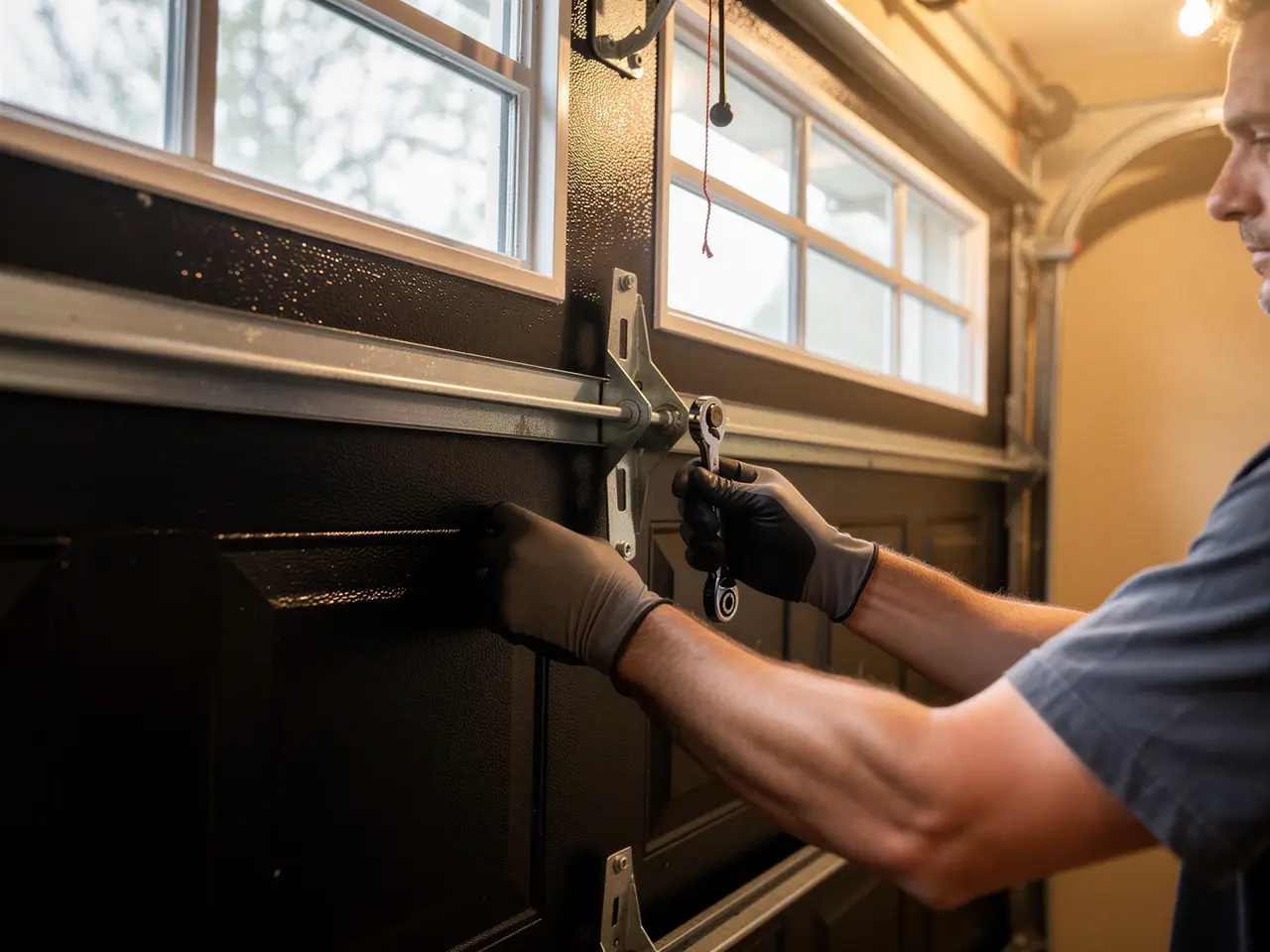
Can You Do This Yourself
Some of it, yes. If your door is just off-track because a roller popped out of the channel, you can sometimes lift the door back into place by hand with the opener disconnected - pull the red release cord first, always. Tightening loose hinge bolts, lubricating hinges and rollers with a garage-door-specific lubricant, and replacing a worn weather seal at the bottom of the door are all jobs a homeowner can handle with basic tools.
What you should not touch: torsion springs. A torsion spring on a standard double door is wound under enough tension to break a wrist or worse if the winding bar slips, and most Pooler homes built from the 1960s through the early 2000s still run that same basic torsion-spring setup, just updated hardware. Cables under tension are the same story - if a cable has frayed or snapped, leave the door down and call someone.
If the opener runs but the door won't move, check the obvious first: is the safety sensor eye blocked or knocked out of alignment, is the wall button wired in, has the remote battery died. Those three catch a surprising number of 'broken opener' calls. Past that, if you're unsure whether something is spring-related, treat it as spring-related and stop.
The Symptom
The call we get most from this area is a door that won't open all the way, or one that opens a foot and then stalls. Close behind that: a loud bang from the garage followed by the door refusing to move at all - that's almost always a torsion spring letting go. Then there's the door that runs crooked, dropping faster on one side than the other, which usually points to one cable or one spring doing more work than its partner.
We also see a steady run of calls about rollers grinding or squealing on the way up, and openers that strain, reverse mid-cycle, or trip the safety sensors for no clear reason. On the newer side of Pooler's housing stock - homes built closer to 2011 - the complaint is more often an opener logic board or sensor issue than a worn mechanical part, simply because the doors themselves haven't had three decades to wear out yet.
If your door is making a new noise it didn't make last month, that's worth a call before it becomes a door that won't move at all.
Why It Happens Here
Pooler's housing stock mostly dates from 1964 through 2011, with the median build year sitting around 1990, and the bulk of homes across the area's 15 named sections went up in the 1980s and 90s. That matters for garage doors because springs, cables, and rollers have a working life measured in cycles, not years - and a torsion spring installed when a house was built in, say, 1988 has had over three decades of daily up-and-down to wear through. A lot of the original hardware in this town is at or past the end of its rated life right now, all at once, because so many houses were built in the same narrow window.
Climate plays a part too. Pooler sits in a mild climate band with occasional freeze - not the deep freeze-thaw cycling that cracks concrete up north, but enough humidity swing and the occasional cold snap to work on steel. Springs that sit exposed in an unconditioned garage go through repeated expansion and contraction, and galvanized coatings that would hold up fine in a drier climate start to pit faster here. It's not dramatic weather damage - it's slow, steady wear that catches up with 30-year-old steel.
The Cost of This Job
We're not going to throw out a number here that we can't back up for your specific door - torsion spring jobs vary by spring size, door weight, and whether one spring or both need replacing, and opener repairs vary by whether it's a sensor, a board, or the whole unit. What we can tell you is what drives the cost up or down.
A single spring replacement on a standard door is a smaller job than a full two-spring swap, and if your cables are also worn, doing them at the same time as the spring costs less than a second truck visit later. Opener issues split the same way - a misaligned sensor is a five-minute fix, a dead logic board usually means a new opener.
Given that median household income across the Pooler service area runs around $80,231, we hear the same question from most callers: fix it or replace the whole door. Our honest answer is that if the door itself - the panels - is original to a house built decades back and now needs a spring, cables, and new rollers all at once, you're often close enough to the cost of a new door that replacement is worth asking about. We'll tell you straight which side of that line your door falls on before we start work.
Frequently asked questions
Why did my garage door spring break with no warning?
Torsion springs wear out by cycle count, not by giving warning signs. A lot of Pooler homes were built in the 1980s and 90s, so their original springs are all reaching end-of-life around the same time. The spring doesn't weaken gradually that you'd notice - it holds until it doesn't.
Is it normal for my door to run crooked?
No. A door that drops faster on one side usually means one cable or spring is carrying more load than the other, often because one has stretched or frayed. Keep using the door that way and you risk the track bending or the door coming off its rollers entirely. Get it looked at before that happens.
Does Pooler's humidity affect garage door hardware?
Yes, though not dramatically. Pooler sits in a mild climate with occasional freeze, and that humidity swing works on galvanized steel coatings over time, especially on older hardware. It's gradual wear, not storm damage, but it adds up on springs and track that have been in place for decades.
Related services
Related guides
By Neighborhood
Garage Door Repair across the Pooler area
We also handle garage door repair in these Pooler-area suburbs.
Book garage door service in Pooler
Call now or request a quote - tell us what the door is doing and where you are.