
Pooler, GA · Garage Door Service
Garage Door Panel Replacement in Pooler
Cracked or dented garage door panels on Pooler homes built from the 1960s through the 2000s. What causes it, what you can fix yourself, and what a panel swap involves.
- Repairs & new doors
- Springs & openers
- Serving 7 nearby communities
Can You Do This Yourself
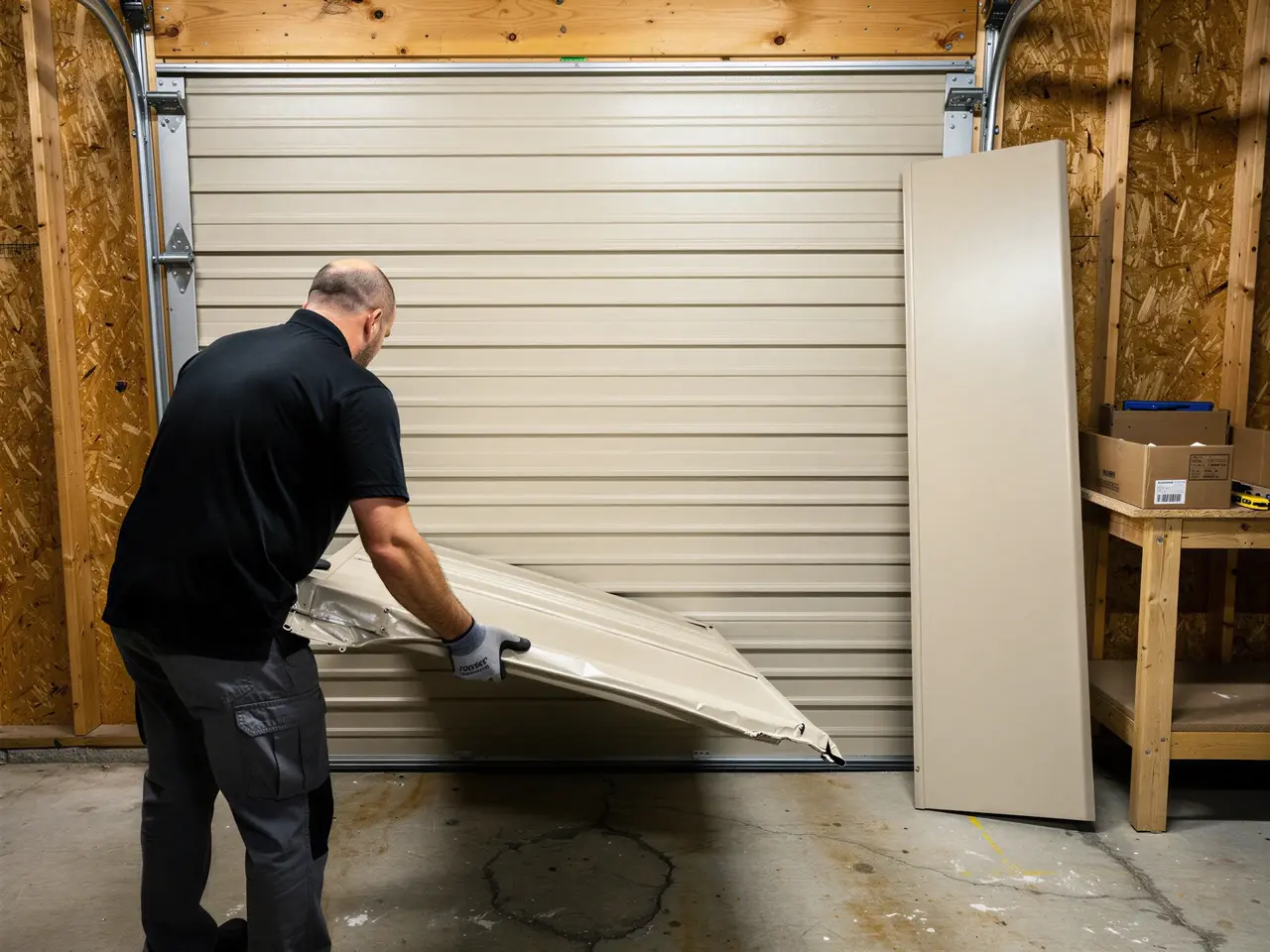
A single dented panel on a steel sectional door is sometimes a DIY job, and sometimes it isn't, depending on where the dent sits and how old the door is. If the panel is just cosmetically bent and the track still runs true, you can often order a replacement skin from the original manufacturer and bolt it in over a weekend, as long as you can still identify the door's model and section height. The trouble starts when the door dates to the 1980s or 90s, which covers a lot of garages in this area. Those models get discontinued, and the hinge spacing or panel profile on a 30-year-old door rarely matches what's sold today. You can also hurt yourself on this job. Panels are tied into the torsion spring system through the track and rollers, and pulling a bottom or middle section out of a door under spring tension is how people lose fingers. If the dent is on a top panel near the opener arm, or if more than one section is damaged, call it in rather than guessing. We'll tell you straight if it's a bolt-on fix or a full-door swap - we'd rather lose an hour of labor than sell you parts that don't fit.
The Symptom
It usually starts small: a horizontal dent from a bumper tap, a crack along a seam after a tree limb drops on the door, or a panel that's bowed out at the bottom where water sat against it. On older doors you'll also see the painted finish chalking and the steel skin separating slightly from the foam core inside - that delamination is what makes a panel feel soft when you press on it. Once a panel is bowed, the door stops sealing flush with the slab, and you start losing the gap at the bottom where your weatherstrip sits. A door with one bad panel usually still opens and closes, which is why people put off calling - but every cycle flexes that section a little more, and eventually the track catches it or a roller pulls loose from the bent metal. If you're seeing light coming through a seam that used to be tight, or the door looks slightly twisted when it's down, that's a panel problem, not an opener problem, and no amount of opener adjustment fixes it.
Why It Happens Here
Housing across this service area was built mostly between 1964 and 2011, with the heaviest concentration going up in the 1980s and 90s across the fifteen named neighborhoods we cover. That means a huge share of the garage doors out there are steel sectional units from that same era - old enough that the galvanized coating has thinned and the foam-core panels have started to separate at the seams, but common enough that replacement parts still exist if you know the model. The climate here is mild with only occasional freeze nights, so panels aren't failing from ice the way they would further north. What gets them instead is humidity cycling into that aging steel: condensation on the inside of the panel skin, rust starting from the inside out, and the bottom section soaking up moisture where it meets the slab. A panel that looks fine from the driveway can be rusted through on the back face. That's a 1980s-90s-stock problem specific to this kind of housing age, not something that shows up the same way on a five-year-old door.
The Cost of This Job
We're not going to put a number here that we can't stand behind on every job, because panel replacement cost swings hard depending on whether we can match your existing door or have to replace the whole unit. A single bolt-on panel on a door that's still in production is the cheapest version of this repair. A door from the 1980s or 90s where the manufacturer discontinued that profile is a different conversation, because at that point you're usually pricing a full door, not a panel. Across the area, with a median household income around $80,231 and the bulk of the housing stock dating to that same 1980s-90s window, most of the calls we get on this job end up being full-door quotes rather than single-panel swaps, simply because the parts don't exist anymore. We'll always price the panel-only option first if it's realistic, and tell you plainly when it isn't worth chasing.
Frequently asked questions
Can I replace just one panel on my garage door?
Sometimes. If your door is still in production or close to it, we can usually order a matching panel and bolt it in. If your door dates to the 1980s or 90s, which a lot of doors in this area do, the manufacturer may have discontinued that exact panel profile, and a full door replacement ends up being the realistic option.
Why does my garage door panel look rusted from the inside but fine outside?
That's common on older steel sectional doors in this climate. Humidity condenses on the inside face of the panel skin over the years, and rust starts from the inside of the foam-core sandwich before it ever shows on the painted exterior. By the time you see it outside, the steel is often already thin.
Is a dented panel actually a safety issue?
It can become one. A bowed or cracked panel flexes more with every open-close cycle, and that extra movement eventually pulls a roller off track or puts uneven load on the cables. It won't fail the day it gets dented, but ignoring it for months is how a cosmetic problem turns into a stuck door.
Do you serve towns near Pooler for this kind of repair?
Yes, we cover the wider area including towns like Bloomingdale and Garden City nearby. The housing stock and climate factors driving panel wear are similar across this whole region, though each town has its own mix of neighborhoods and ages.
Related services
By Neighborhood
Panel Replacement across the Pooler area
We also handle panel replacement in these Pooler-area suburbs.
Book garage door service in Pooler
Call now or request a quote - tell us what the door is doing and where you are.