
Pooler, GA · Garage Door Service
What That Noise in Your Pooler Garage Really Means
Pooler homes built mostly in the 1980s and 90s have original hardware reaching the end of its life. Here's what each noise means and when to call.
- Repairs & new doors
- Springs & openers
- Serving 7 nearby communities
When to Call Someone
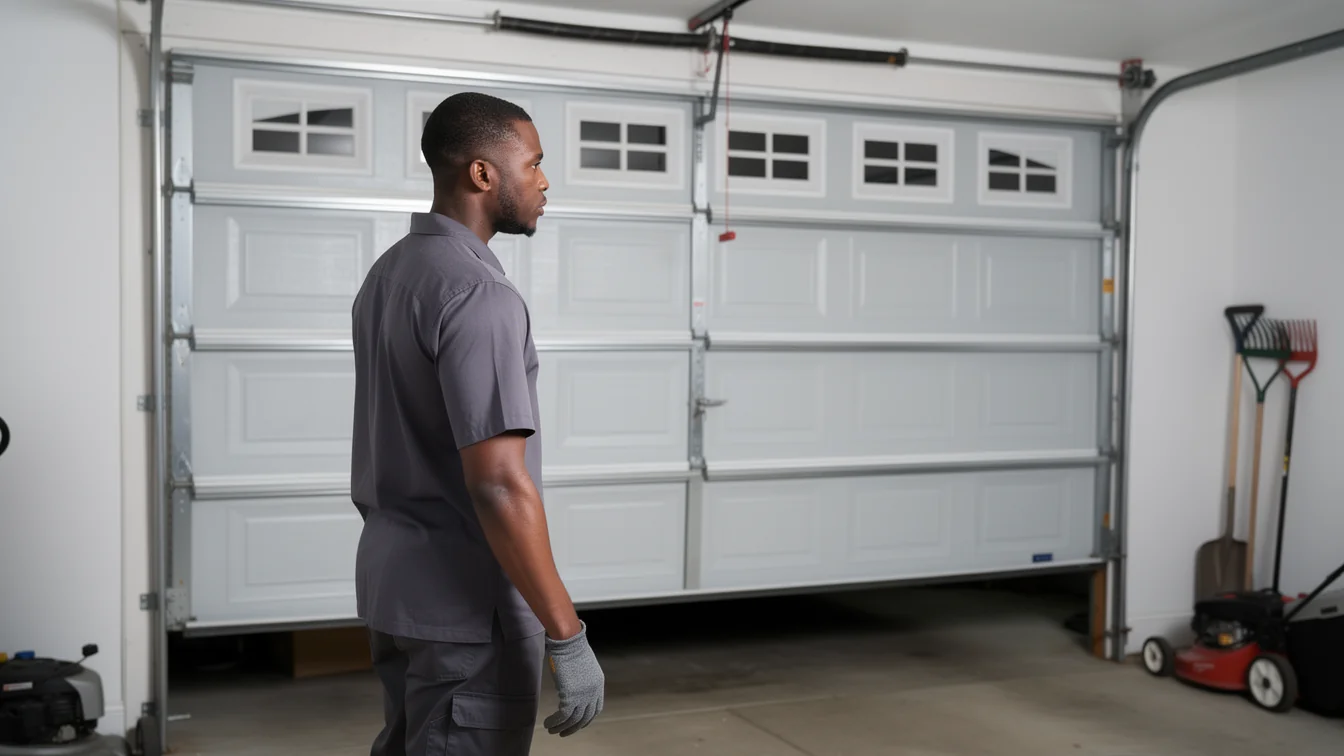
Most houses in Pooler went up between 1964 and 2011, with the bulk of the stock dating to the 1980s and 90s across the area's 15 named neighborhoods. That matters because a door installed in 1987 is pushing 40 years on its original hardware, and springs, rollers, and cables don't last that long no matter how well the door was built. If you're hearing a grinding sound when the door travels, a hard bang partway through the cycle, or a pop followed by the door refusing to move, that's not a sound to live with. Call someone the same day for a snapped cable or a spring that's let go - the door is under tension and a torsion spring under load can hurt someone standing nearby. A squeak that's been there for months and hasn't changed is a different story; that can usually wait for a scheduled visit. The line between "wait" and "call now" is whether the noise is new, whether it's getting worse, and whether the door still opens and closes smoothly. If any of those answers is no, don't keep opening it to find out.
The Problem
A door that's noisy today was quiet once. In a lot of Pooler homes built in that 1980s-90s window, what's changed isn't the door panel - it's the galvanized hardware behind it. Rollers wear flat on one side after a few thousand cycles. Hinges stretch their mounting holes. Torsion springs lose a measurable amount of tension every year they operate, and by year 30-plus they're near the end of their rated cycle life whether or not they've ever broken. None of this shows up as a single dramatic failure most of the time. It shows up as noise first - a new rattle, a thunk at the same spot in the track every time, a motor that strains longer than it used to. The age distribution of housing here means a large share of doors are working through exactly that wear curve right now, which is why noise complaints cluster around specific sounds rather than random breakdowns. The honest limitation: noise alone doesn't tell you if it's a $20 roller or a spring that's one cycle from failing. Diagnosing which one it is takes a hands-on look at the hardware, not a guess over the phone.
What Local Conditions Do
Pooler sits in a mild climate with occasional freezes, not the deep freeze-thaw cycling that cracks concrete and seizes metal up north. That's good news for the door panel itself - less expansion and contraction stress over the years. But mild and humid isn't nothing. Metal hardware that sits through Georgia's humidity swings still corrodes slowly at contact points - roller shafts, hinge pins, spring coils - especially on doors that haven't been lubricated in years. An occasional freeze snap can also stiffen grease that's already old, which is often when a homeowner first notices a grind that wasn't there the week before. None of this is dramatic weather damage. It's a slow accumulation that happens quietly in a garage nobody thinks about until the door starts complaining. If your opener strains more on a cold morning and then runs fine by afternoon, that's consistent with old lubricant reacting to a temperature dip, not a sign the whole unit is failing - though it's still worth having someone look at the hardware before it gets worse.
What to Check
Before you call anyone, a few checks take five minutes and tell you a lot. Stand clear and watch the door move through a full cycle - does it hesitate or jerk at the same spot every time? That's usually a track or roller issue, not the spring. Listen for where the sound happens: near the top (springs or cable drum), midway (rollers or track alignment), or right at the motor (opener gear or chain). Look at the springs themselves if you can see them safely - a visible gap in the coil means it's broken, full stop, and the door shouldn't be operated. Check that the tracks are bolted tight to the frame; loose brackets cause a rattle that sounds worse than it is. None of this replaces a real inspection, and if you're not comfortable getting close to a door under spring tension, don't push it - that's exactly the kind of job where a wrong move causes an injury, not just a bigger repair bill. Across the roughly 24,812 owner-occupied houses in this service area, the pattern holds: age-related wear, not bad luck, drives most of these calls.
Frequently asked questions
My garage door makes a loud bang but still opens fine. Should I worry?
Yes. A bang during the cycle is often a spring or cable losing tension suddenly, even if the door still moves. In a 1980s or 90s Pooler home with original hardware, that's a sign the spring is near failure. Keep using the door minimally and get the hardware checked before it fails completely while someone's standing under it.
Why does my door grind only in the morning?
Cold, stiff grease on old hardware is the usual cause. Pooler's mild climate with occasional freezes doesn't freeze doors shut, but it does stiffen lubricant that hasn't been replaced in years, especially overnight. If it loosens up by afternoon, the fix is usually re-lubricating the hardware, not replacing it.
Is a noisy door always a spring problem?
No. Noise location matters more than volume. Grinding near the top is often springs or the cable drum; a rattle midway is usually rollers or loose track brackets; a strain at the motor points to the opener itself. We can't tell which from a description alone - it needs a look at the actual hardware.
Related garage door services in Pooler
More garage door guides
Book garage door service in Pooler
Call now or request a quote - tell us what the door is doing and where you are.