
Pooler, GA · Garage Door Service
Fixing vs. Replacing: What Pooler's Housing Stock Tells You
Pooler's housing runs 1964 to 2011, median build year 1990. Here's how that age and this mild climate decide whether your door is worth repairing or replacing.
- Repairs & new doors
- Springs & openers
- Serving 7 nearby communities
When to Call Someone
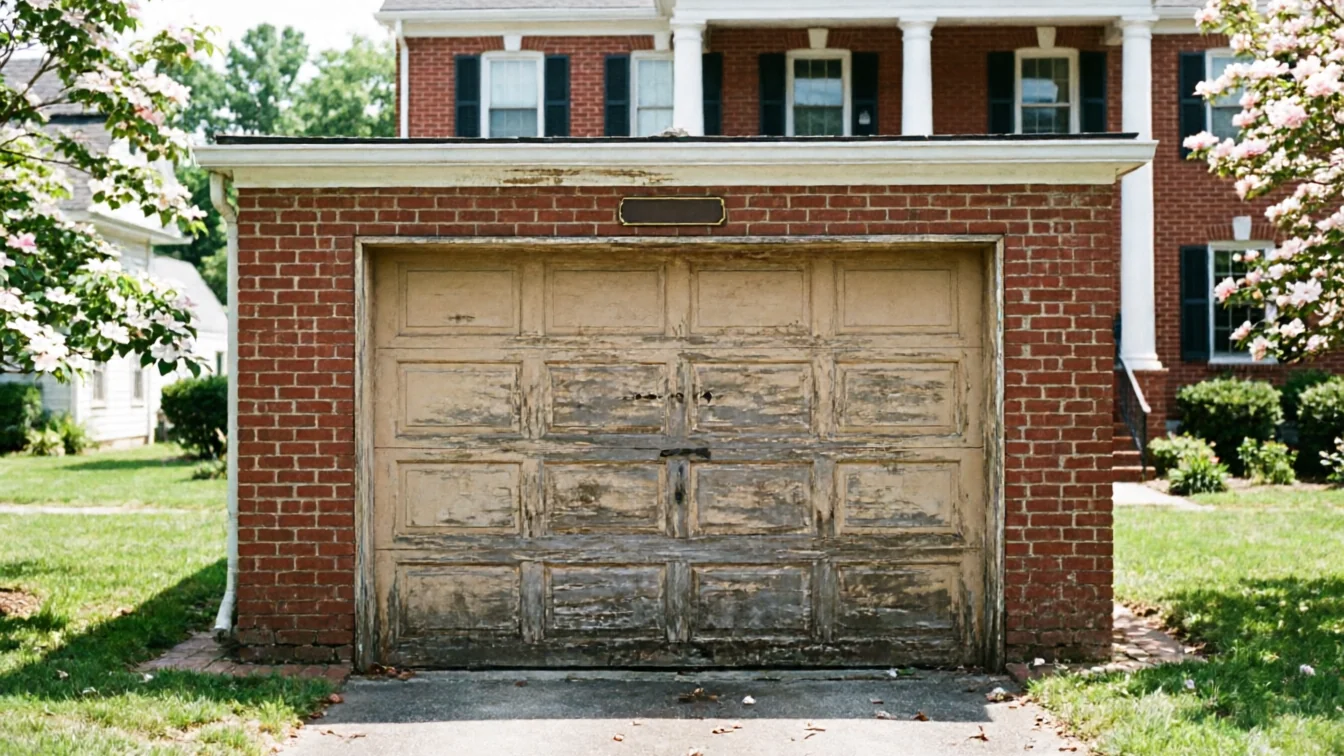
Most houses in the areas we cover went up between 1964 and 2011, with the heaviest concentration landing around 1990. That matters more than people think. A door that's original to a house built in the late 80s or early 90s is somewhere past 30 years old, and at that point you're not dealing with a worn part here and there - you're dealing with a whole system of hardware that was engineered for a door and a code era that's gone.
Call someone when the door is slow to respond, when it shudders instead of gliding, when the opener strains on the way up, or when a spring has already let go. Don't wait for all four. One symptom on a door from that build window is usually the first sign of several things aging out at once.
We're straight about this: not every call needs a truck. If the door is newer, or the fix is a $20 sensor, we'd rather tell you that on the phone than bill you for a visit. The houses where this gets serious are the ones sitting on original torsion hardware from the 1980s-90s run - that's where a small symptom usually means the whole spring and cable set is due.
The Problem
With median construction landing around 1990 and the broad range running 1964 to 2011, a huge share of doors in this area are old enough that their springs have done 10,000-plus cycles and their rollers have outlived the grease they shipped with. Torsion springs are rated for cycles, not years, and a door that's been opened twice a day for three decades is well past the number stamped on the spring when it was new.
The second problem is parts availability. Doors and openers from that 1980s-90s stretch often used hardware sizes and mounting setups that newer production doesn't match. A torsion shaft, a specific drum size, a discontinued opener gear - sometimes we can source it, sometimes the fix costs more in time than a new spring kit and updated hardware would.
That's the honest limitation on this page: if your door is from that original build era and the opener has already failed once, we'll often tell you straight that patching it again isn't the better spend. Replacing the spring system is almost always worth it. Replacing a 35-year-old opener a second time usually isn't.
What Local Conditions Do
This area sits in a mild climate band with only occasional freeze conditions, which changes what actually breaks a door here compared to a place with hard winters. Cold-snap spring failure - where metal contracts and a worn spring snaps on a frost morning - isn't the main driver here. What we see instead is plain fatigue: years of cycles without the sharp cold that would have forced an earlier failure and an earlier repair.
That sounds like good news, and mostly it is. It means the steel itself isn't being stressed by freeze-thaw the way it would be further north. But it also means a spring or a bearing can run well past the point it should have been replaced, because nothing forced the issue. The door just gets slower, louder, and harder on the opener motor, one year at a time, until something finally lets go - usually without much warning.
For houses from the 1964-2011 build range, that slow fatigue curve is the thing to watch for, not a dramatic weather event.
What to Check
Start with the spring. If your house falls in the common 1980s-90s construction window for this area, look at the torsion spring above the door - rust, gaps between coils, or visible stretching means it's near the end, not just cosmetically worn.
Next, listen to the opener. A motor that used to lift the door in about ten seconds and now takes noticeably longer is compensating for drag somewhere in the system - usually the spring, sometimes the rollers.
Check the cables for fraying where they wrap the drum, and check the track for gaps where the rollers have worn an older, narrower channel than current hardware uses.
Finally, think about ownership math. With 24,812 owner-occupied houses against a median household income of $80,231 across this area, a lot of households here are weighing a full repair against a full replacement on a door that's still structurally sound otherwise. If the panels and track are solid and it's just the spring and cable system that's aged out, fixing it is usually the better spend than starting over.
Frequently asked questions
How old does a garage door have to be before repair isn't worth it anymore?
Age alone isn't the test - cycle count and hardware condition are. A door from the common 1980s-90s build range here can still be a good repair candidate if the panels and track are solid and only the spring or cable system has failed. It's a second opener failure or a bent track that usually tips the math toward replacing.
Why did my door just start failing with no cold weather involved?
This area sits in a mild climate band with only occasional freeze, so most spring failures here come from plain fatigue - years of cycles - rather than a cold snap snapping stressed metal. The door slows down gradually rather than failing on a single frosty morning.
Can you still get parts for a door built in the 1980s or 90s?
Sometimes. Torsion shafts, drum sizes, and some opener gears from that era aren't always stocked anymore. We'll check before we commit you to a repair, and we'll tell you honestly if sourcing the exact part costs more than it's worth compared to updating the hardware.
Related garage door services in Pooler
More garage door guides
Book garage door service in Pooler
Call now or request a quote - tell us what the door is doing and where you are.