
Pooler, GA · Garage Door Service
Garage Door Service for Richmond Hill, GA
Garage door repair and opener service for Richmond Hill homes built mostly after 2000, from the Pooler Garage Door Pros crew 15 miles up the road.
- Repairs & new doors
- Springs & openers
- Serving 7 nearby communities
What We Do Not Do
We don't keep a crew stationed in Richmond Hill. We run out of Pooler, about 15 miles away, and that drive is worth saying plainly because it shapes how we schedule: we batch Richmond Hill calls rather than treat every one as a same-minute dash. We also don't work on doors where the wood frame around the opening has rotted out from behind the trim - that's a carpentry job first, and we'll tell you so instead of forcing a new door into a bad opening. And we don't guess at parts over the phone for a house we haven't seen; a torsion spring sized wrong is worse than the broken one you started with.
What we will do is show up with the truck stocked for the kind of door this area actually has, because that's different from what you'd find on an older street in Pooler itself. If a job needs a part we don't carry, we say that up front rather than padding the invoice with a second trip disguised as thoroughness.
What That Means for Doors
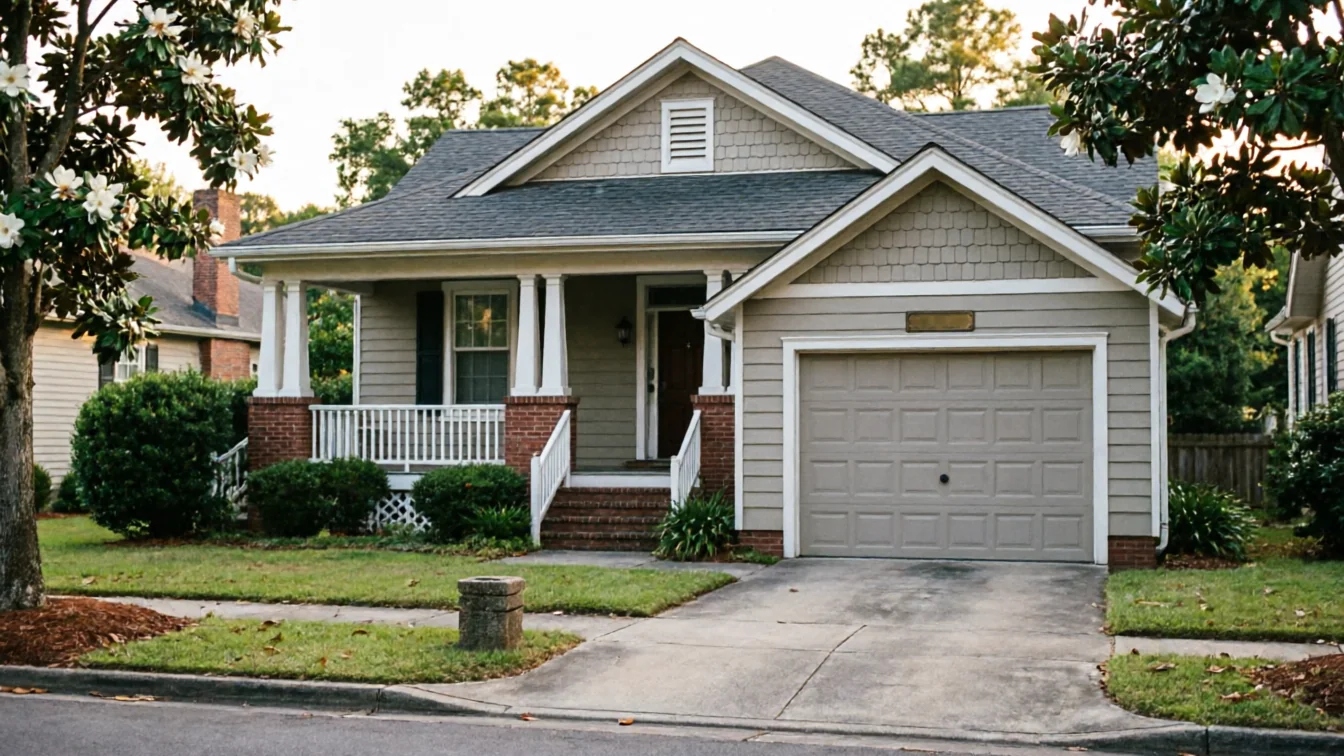
The median home here was built around 2005, which puts most garage doors well inside the modern era of steel sectional panels, insulated cores, and factory-set extension or torsion springs rated for a specific door weight. That's a different animal from the 1980s stock common across the wider service area. You're not dealing with the one-piece tilt-up doors or the mismatched hardware that shows up on houses built decades earlier - you're dealing with doors that are mostly original to the house and now 15 to 20 years into their working life, which is exactly when springs fatigue, rollers wear oval, and openers built in the early 2000s start dropping circuit boards.
The upside of newer construction is that panel sizes and spring specs are standardized enough that we're not hunting for an obsolete part. The downside is that a 2005-era chain-drive opener is old enough now that the logic board or capacitor is a more likely failure than the motor itself, and replacement boards for some of those models are getting harder to source.
The Usual Work Here
Most of the calls we get from this side of the service area are springs and openers, not panels. A torsion spring rated for a 2005-build door has usually done 10,000 to 15,000 cycles by now, which is right where fatigue failure shows up - a loud bang, then a door that won't lift past waist height. Opener capacitors and logic boards from that build era are the second most common call; the door moves fine by hand but the remote and wall button do nothing.
Our climate here runs mild with the occasional freeze, which is gentler on hardware than a hard freeze-thaw climate would be - it's not usually the cold snapping a cable, it's just years of cycles. Roller wear is the other steady item: nylon rollers on 15-to-20-year-old track start to flat-spot and bind, and that shows up as a door that's noisy or hesitates partway up. We carry stock for these three jobs specifically because they're what a 2005-median neighborhood actually needs, not what an older street does.
The Houses Here
With close to 5,895 households and a median income near $89,910, this is a newer-built, steadier-income stretch than the service-area average, and it shows in the garages: attached two-car openings, factory doors, builder-grade openers that were decent mid-2000s units rather than bargain-bin hardware. That matters for repair decisions - a door this age is usually worth fixing rather than replacing, since the frame, track, and opening are still sound and it's a spring or opener problem, not a structural one.
We don't see much of the original one-piece or wood-panel stock that you'd find on older streets elsewhere in the service area; the housing simply wasn't there yet. What we do see is the predictable mid-life failure curve of doors installed in a narrow building window, which means when one house on a street has a spring go, the neighbor's is often not far behind on the same clock.
Frequently asked questions
Do you have a crew based in Richmond Hill?
No. We run out of Pooler, about 15 miles away, and travel out for scheduled jobs. We don't advertise a local depot or a guaranteed response window here because we don't have one to promise honestly.
Is my opener too old to fix?
Depends on the fault. A lot of the 2005-era chain-drive openers common in Richmond Hill fail at the logic board or capacitor, not the motor, and those can sometimes be replaced. If the board is obsolete and unavailable, replacement is the honest answer.
Why did my spring break with no warning?
Torsion springs fail by fatigue, not by a single event. A spring installed when your house was built in the early-to-mid 2000s has likely done over 10,000 open-close cycles by now, which is right in the range where fatigue failure shows up as a sudden bang.
Does the mild winters here mean less wear on my door?
Some. The mild, occasional-freeze climate in this area is gentler on cables and hardware than a true freeze-thaw climate, so you're less likely to see cold-snapped cables. Cycle fatigue from daily use is still the main driver of spring and roller wear.
Garage door services in Richmond Hill
Every service our crew runs in Richmond Hill, GA.
Book garage door service in Pooler
Call now or request a quote - tell us what the door is doing and where you are.