
Pooler, GA · Garage Door Service
Panel Replacement for Bloomingdale's 1980s Garage Doors
Bloomingdale homes mostly date to the mid-1980s, which means steel panel doors are hitting 35-40 years old. We replace cracked, rusted, or dented sections from our Pooler shop, 3 miles away.
- Repairs & new doors
- Springs & openers
- Serving 7 nearby communities
Why It Happens Here
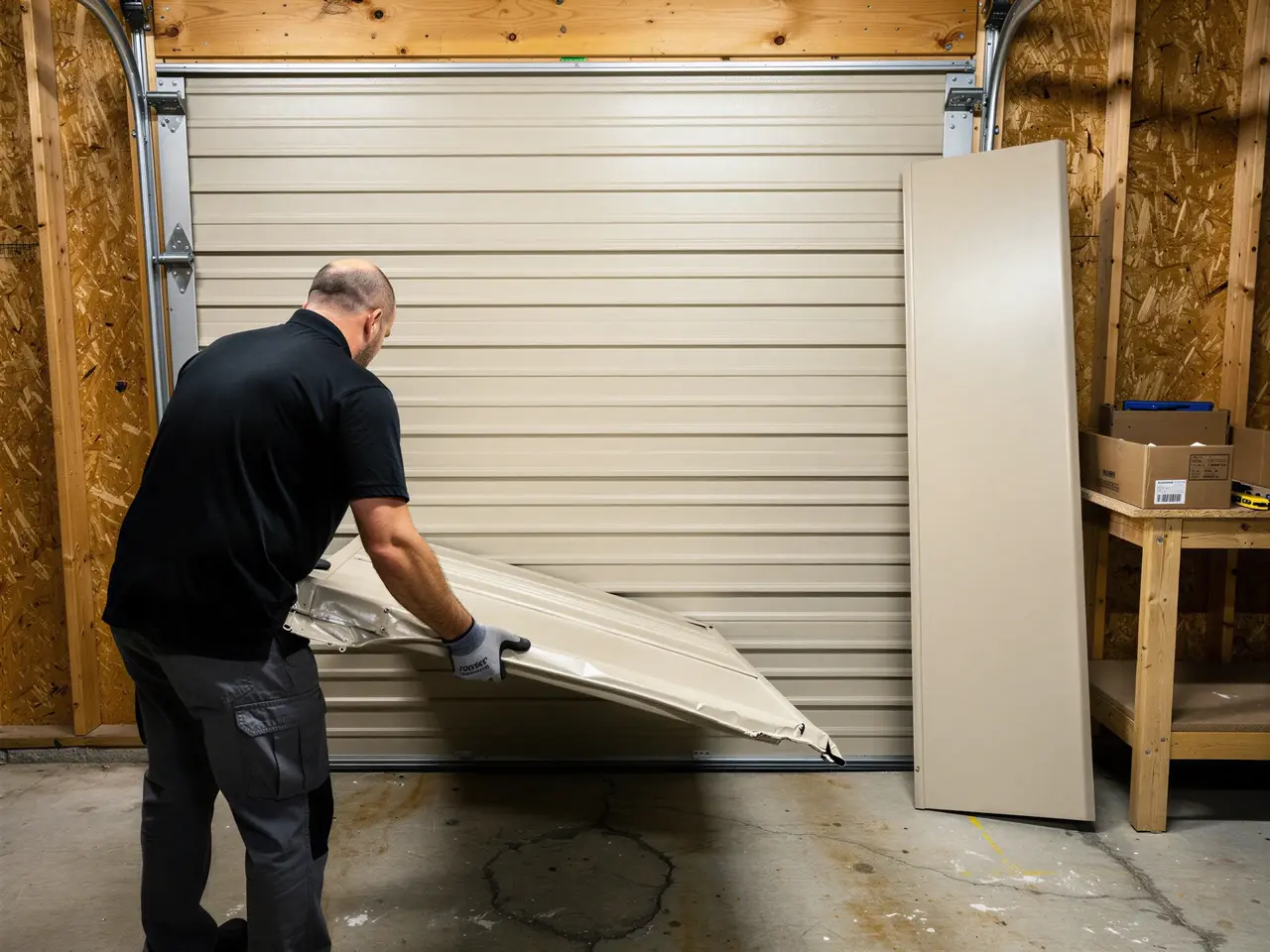
Most of the garage doors we get called out to in Bloomingdale are the same basic build: steel sections with a thin foam core, hung on houses that went up around 1986. That's the median build year here, and it matters because that generation of door used a bottom panel that sits closer to grade than what's installed today. After three and a half decades, that bottom section is almost always the one that's cracked, rusted through at the seam, or dented from a mower or a bumper.
The fault we see most isn't the opener or the spring - it's a single panel that's failed while the rest of the door still tracks fine. Sun and moisture work on the bottom rail first, and once the foam core gets wet inside the steel skin, it bubbles and the panel stops sitting flush. You end up with a door that still opens and closes but leaks daylight along one seam, or binds slightly because that section has warped a few millimeters out of true.
How Long You Are Without the Door
A single-panel swap on a door this age is usually a same-visit job once we've got the right section in hand - we unbolt the damaged panel, lift the door off that hinge point, and set the replacement without touching the spring or opener unless something else is worn. The door isn't out of commission for days; it's down for the length of the job itself.
Where it slows down is sourcing. Doors from the mid-1980s often used panel profiles and colors that aren't a stock item anymore, so matching the exact embossing or finish on a 1986 door sometimes means a short wait on the part rather than the labor. We'll tell you up front if your door's profile is something we can grab off the truck or something we need to order.
Getting It Booked In
We run this job out of Pooler, and Bloomingdale sits about 3 miles out, so getting a tech to your door isn't the bottleneck - it's getting an accurate match on the panel before the truck rolls. The more we know before we show up (the brand stamped on the inside of the track, or at least a photo of the damaged section), the better the chance we bring the right part the first time instead of making a second trip.
If you're not sure what you've got, that's fine - we can look at it and figure out whether it's a bolt-in panel swap or something that calls for a different approach. Either way, the visit itself is short since we're not driving in from across town.
The Cost of This Job
We don't have a flat number to post here, because what a panel costs depends entirely on whether your door's profile is still in production or whether we're sourcing a close match for a discontinued style - and on a street of 1980s-built houses, discontinued is common. What we can tell you is that a single-panel repair almost always costs less than replacing the whole door, and for a door that's otherwise tracking straight and running quiet, it's usually the right call.
Where it stops making sense is a door with two or three failed panels, worn rollers, and a spring that's original to the house. At that point you're paying piecemeal for a door that's going to keep presenting new problems, and a full replacement starts to pencil out better over the long run. We'll say so plainly if that's what we see.
The Symptom
The giveaway on these 1986-era doors is almost always a visible gap or a flex line at the bottom one or two sections - the door looks fine from a distance, closes, and locks, but up close you can see a seam that doesn't sit flush or a rust line creeping up from the bottom edge. Some owners also notice the door suddenly feels heavier to lift by hand, which usually means the damaged panel's foam core is waterlogged, adding real weight the springs weren't sized for.
If you're hearing a scrape or seeing daylight at one specific spot rather than the whole door working stiffly, that points to a panel problem, not a spring or track problem. Worth mentioning before you call: a dented panel with intact paint is a different repair than a rusted-through one, so a quick photo helps us figure out which it is before we're standing in your driveway.
Frequently asked questions
Will a new panel match the rest of my door?
We do our best to match the embossing and color, but on doors built around 1986 the exact profile may no longer be manufactured. In that case we source the closest current match and tell you honestly if it won't be an exact blend before we order anything.
Do you have a shop in Bloomingdale?
No - we're based in Pooler, about 3 miles from Bloomingdale, and we drive out for the job. There's no local branch here, just a short trip for the truck.
Can one bad panel affect the rest of the door?
Yes, if it's left alone. A waterlogged or warped panel adds uneven weight and can throw the door slightly out of square, which puts extra strain on rollers and the spring over time. Fixing it early is cheaper than waiting until it drags the rest of the door down with it.
More garage door services in Bloomingdale
Book garage door service in Pooler
Call now or request a quote - tell us what the door is doing and where you are.